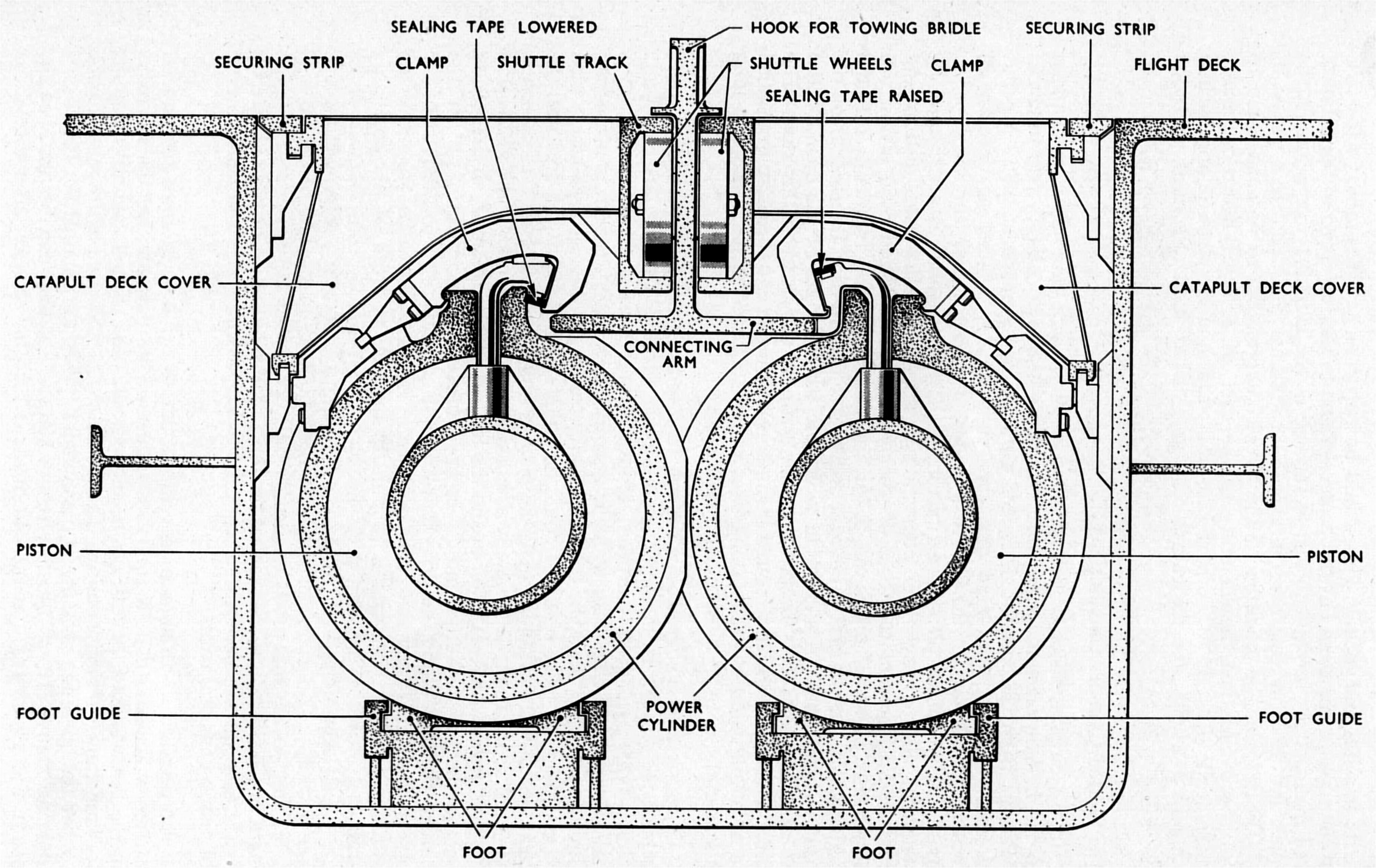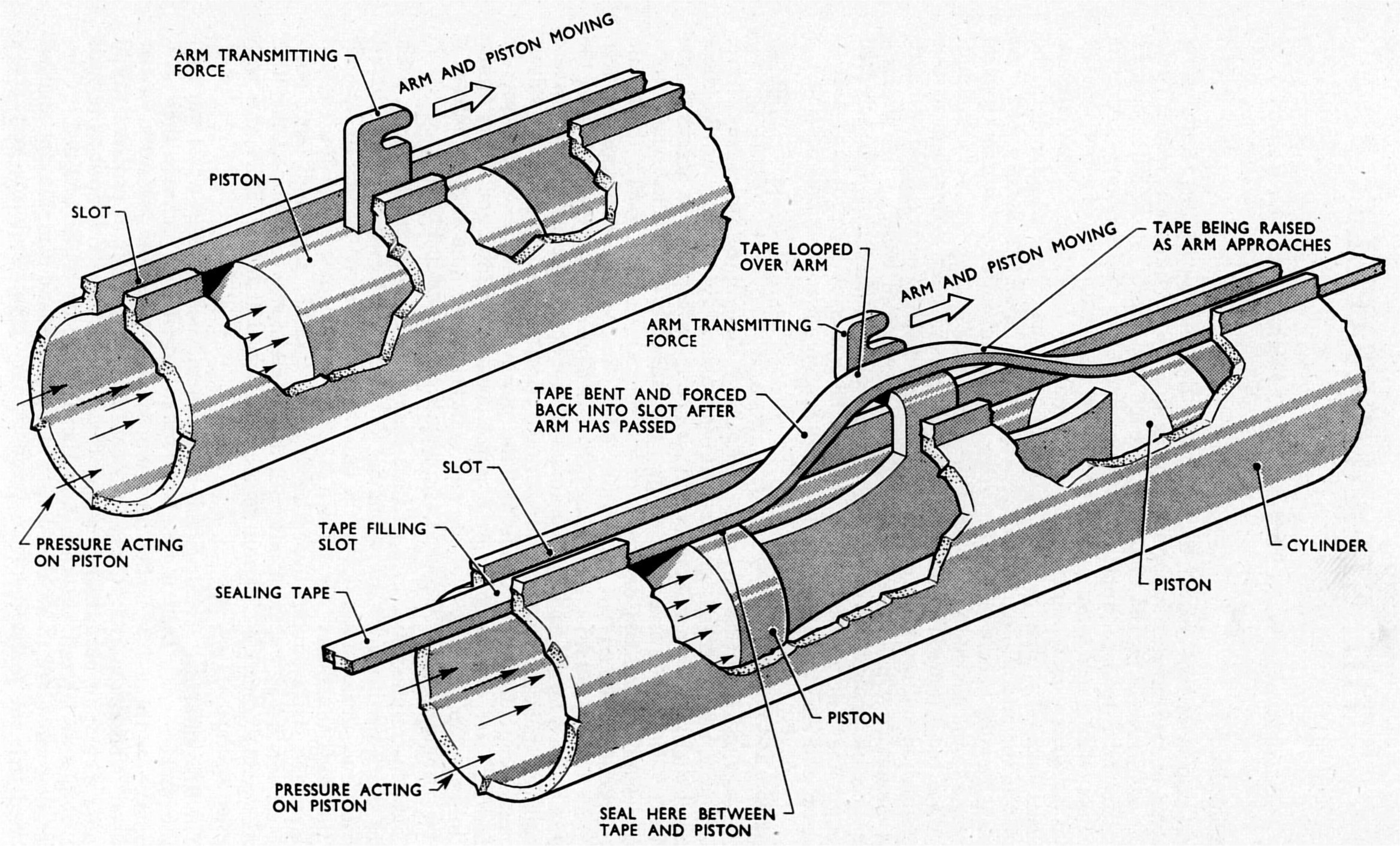
The most difficult engineering challenge in making a steam catapult system is designing and maintaining the slotted cylinder sealing mechanism (the flexible sealing strip or "zipper" seal) that prevents massive high-pressure steam leaks while letting the piston connect to the aircraft shuttle above deck. [1]
The Slotted Cylinder Challenge
- Extreme Pressure: The system uses superheated, high-pressure steam (hundreds of pounds per square inch) inside a long cylinder embedded in the flight deck. [1]
- The Opening Slot: A continuous open slot runs the entire length of the cylinder so a projecting arm can link the internal piston to the external launch shuttle pulling the jet. [1]
- Dynamic Sealing: A flexible steel sealing tape must lift up immediately in front of the moving piston arm and press tightly closed immediately behind it at speeds over 160 mph—acting like a high-speed mechanical zipper under extreme heat and pressure. [1]
- Failure Risks: If the seal fails to close or leaks under the immense pressure, massive energy escapes, causing a catastrophic loss of launch power ("cold shot") or severe mechanical damage. [1, 2]
Other Major Difficulties
- Energy Management: Capturing and rapidly discharging thousands of pounds of steam per launch from nuclear reactors or boilers into accumulators requires immense, heavy piping and valving infrastructure below deck. [1, 2]
- Airframe Stress: Controlling the raw, blunt force of expanding steam without digital feedback means the system delivers a violent initial jolt that stresses the aircraft frame to its absolute limits. [1]